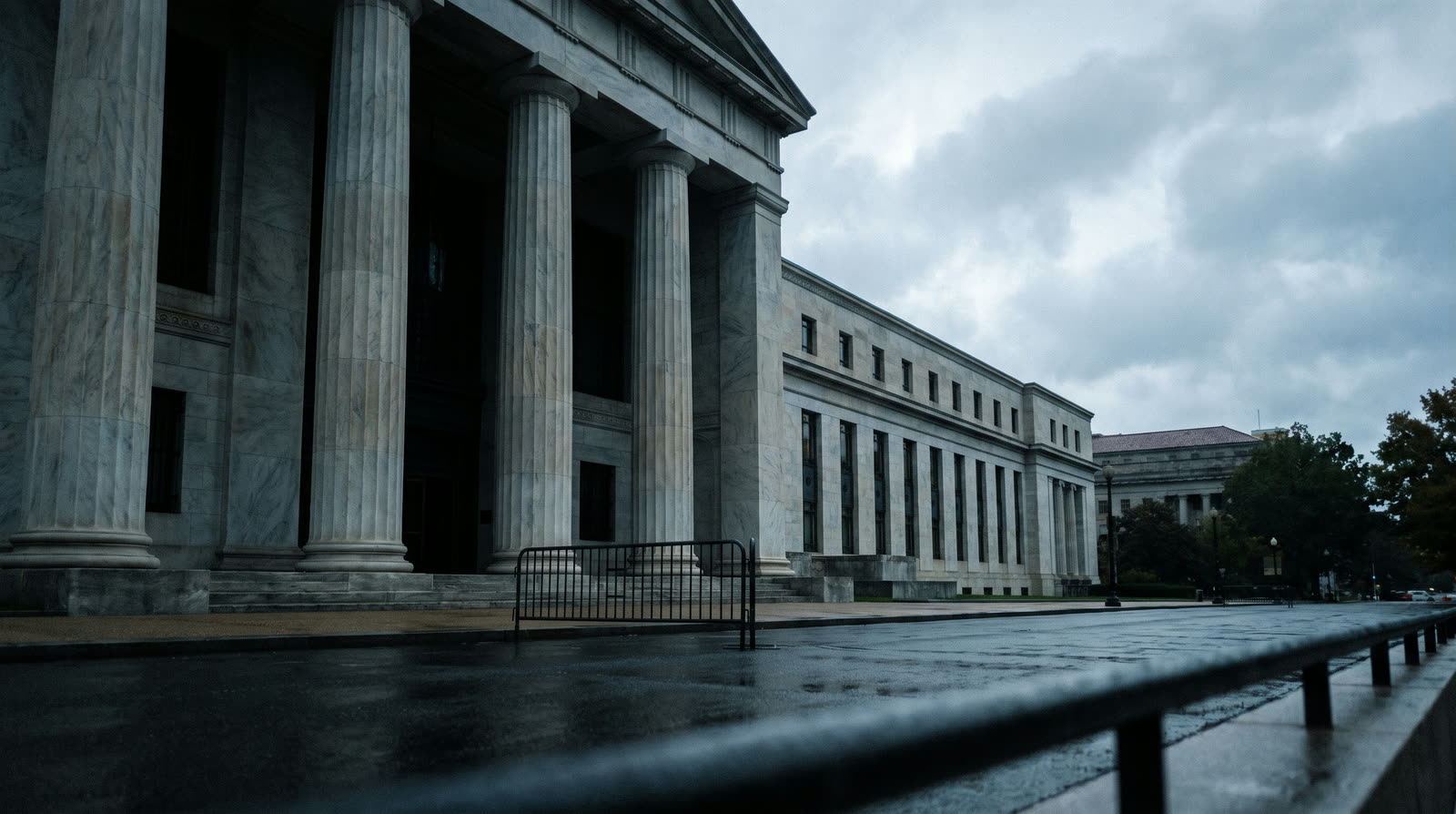
After cutting interest rates three times in 2025, the Federal Reserve hit the pause button. In March 2026 it held its target rate at 3.50 to 3.75 percent, and markets are now split on whether the next move is up or down. For everyday Americans, that word "hold" carries a lot of weight. It touches your savings, your mortgage, your credit cards, and your loans.
So what does "higher-for-longer" actually mean for your wallet? Let us walk through it product by product, in plain English, and cover the smart moves you can make while rates stay put.
What the federal funds rate actually is
The federal funds rate is the interest rate banks charge each other to borrow money overnight. It sounds distant from your daily life, but it is the tap that controls the flow of interest across the whole economy.
When the Fed raises this rate, borrowing gets more expensive and saving pays more. When it cuts, the opposite happens. Right now the Fed is holding steady, which means the recent higher rates are sticking around rather than falling quickly. That is what people mean by higher-for-longer.
What it means for your savings
Here is the bright side. When rates are high, banks pay you more to keep your cash with them. The interest you earn on savings is measured as an APY (annual percentage yield), which is simply how much your money grows in a year, including the effect of interest building on interest.
With the Fed on hold, high-yield savings accounts and certificates of deposit are still paying attractive rates. This is a rare window where your cash can earn real money for sitting safely in the bank. If your savings are in an old account paying almost nothing, you are leaving money on the table. We cover how to make the most of this in our guide to high-yield savings in a higher-for-longer world.
What it means for your mortgage
Mortgages are where high rates bite hardest. When the Fed keeps rates elevated, mortgage rates tend to stay high too. That makes buying a home more expensive, because a bigger slice of your monthly payment goes to interest rather than paying down the loan.
If you already have a fixed-rate mortgage locked in from the low-rate years, good news: your payment does not change. If you are shopping for a home now, you face higher costs, and you may hear the phrase "marry the house, date the rate", meaning buy the home you love and refinance later if rates fall. Just do not count on a fall that may not come.
What it means for your credit cards
Credit cards are the most painful place to carry a balance when rates are high. Most cards have a variable APR, which means the interest they charge moves with the Fed's rate. With the Fed on hold at elevated levels, card APRs stay stubbornly high, often near 20 percent.
That is a brutal rate to pay on debt. If you carry a balance, this is the single most important thing to tackle. Paying it down beats almost any investment you could make, because clearing 20 percent interest is like earning a guaranteed 20 percent return. For a full plan, see our guide on killing credit card debt when APRs are stuck high.
A word on CDs and locking your rate
A CD (certificate of deposit) is a savings product where you agree to leave your money untouched for a set time, say six months or a year, in exchange for a fixed rate. In a higher-for-longer world, a CD can be a smart way to lock in today's good rate before any future cut. The trade-off is access: pull the money out early and you usually pay a penalty. So CDs suit cash you know you will not need for a while, while your everyday emergency money stays in an easy-access account.
What it means for auto and student loans
Loans behave differently depending on their type, so it helps to split them up.
- Auto loans. New car loans are pricier when rates are high, and a higher APR means a bigger monthly payment or a longer term. Shopping around for financing, and getting pre-approved before you visit the dealer, can save you real money.
- Federal student loans. If you already have a fixed-rate federal loan, your rate is locked and the Fed's decisions do not change it. New federal loans, though, are set each year and reflect the higher-rate environment.
- Private and variable loans. These can move with rates. If you have a variable-rate loan, higher-for-longer means your payment may stay high.
Why the flow from the Fed to your wallet takes time
One thing that confuses people is timing. When the Fed changes its rate, you do not feel it everywhere at once. Some things move almost immediately, like the variable APR on your credit card. Others move more slowly, and some do not move at all.
A helpful way to picture it:
- Fast movers: credit card APRs and savings account rates tend to react within a statement cycle or two.
- Slower movers: mortgage rates follow the wider bond market, so they can drift up or down before the Fed even acts, based on what investors expect.
- Frozen in place: any fixed-rate loan you already hold, from a mortgage to a federal student loan, does not change at all. That is the whole point of a fixed rate.
Knowing which of your own products are fast, slow, or frozen tells you exactly where a Fed decision will hit you and where it will not.
Smart moves for savers right now
If you are a saver, this is your moment. Make it count.
- Move idle cash into a high-yield savings account so it actually earns something.
- Consider locking some money in a CD if you want to guarantee today's rate for a set period.
- Keep your emergency fund liquid and easy to reach, even while chasing yield elsewhere.
- Remember that interest you earn is taxable, so factor that into your plans.
Smart moves for borrowers right now
If you owe money, focus on cutting the cost of that debt.
- Attack high-interest debt first, especially credit cards. This is the best guaranteed return you can get.
- Avoid taking on new variable-rate debt while rates are elevated, if you can help it.
- If you have a fixed low-rate mortgage, treasure it and think twice before giving it up.
- Do not stretch a car loan over seven or eight years just to shrink the monthly payment; it costs you far more in interest overall.
- Before borrowing for anything new, ask whether you truly need it now or whether waiting and saving would cost far less in interest.
None of these moves are complicated. They just require you to act on the environment as it actually is, rather than the low-rate world of a few years ago. Higher-for-longer is not a headline to fear; it is simply the setting you are playing in, and knowing the rules puts you ahead of most people.
Should you try to guess the Fed's next move?
It is tempting to plan your whole financial life around what the Fed might do next. Resist that urge. Markets are split for a reason: even the experts genuinely do not know whether the next move is a cut or a hike. Betting your mortgage timing or your savings plan on a forecast is a gamble, not a strategy.
A better approach is to build a plan that works whichever way rates go. If you keep expensive debt low and your emergency savings healthy, you are in good shape whether rates rise, fall, or stay flat. Certainty is not on offer, so aim for resilience instead.
Why the Fed is being cautious
You might wonder why the Fed does not just cut rates and make life cheaper. The reason is inflation, the general rise in prices. If the Fed cuts too soon, it risks letting prices climb again. By holding, it is trying to keep inflation under control without slamming the brakes on the economy. It is a balancing act, and nobody, including the Fed, knows for certain which way the next move goes.
It also explains why the Fed moved three times in 2025 and then stopped. Cutting too fast can reignite the very inflation it fought hard to cool. Holding gives the Fed time to watch the data, month by month, before deciding whether the economy needs more support or more restraint. For you, the practical message is that steady beats clever: a plan built for patience will serve you better than one built on a guess about the next meeting.
The takeaway
A Fed on hold means the recent higher rates are likely to stick around for a while. That is a mixed bag: rough on borrowers, but genuinely good for savers. The winning strategy is simple. Make your cash work harder in high-yield accounts, and hit your expensive debt as hard as you can. Do those two things and you turn a higher-for-longer world to your advantage.
This article is general information to help you understand how interest rates affect your money. It is not personal financial advice. Your own situation is unique, so consider speaking to a qualified professional before making big decisions.
General information, not advice. This article is published to everyone who reads it and takes no account of your circumstances, so it is not a personal recommendation. Trader Suite is not authorised or regulated by the FCA. Trading and investing involve a substantial risk of loss, and you should seek independent advice before acting. Our articles are researched and drafted with AI assistance and reviewed before publishing. Full risk disclosure.
TraderSuite Team
TraderSuite builds indicators and automated strategies for NinjaTrader 8. Our articles are written by the team, researched and drafted with AI assistance, and reviewed before publishing.