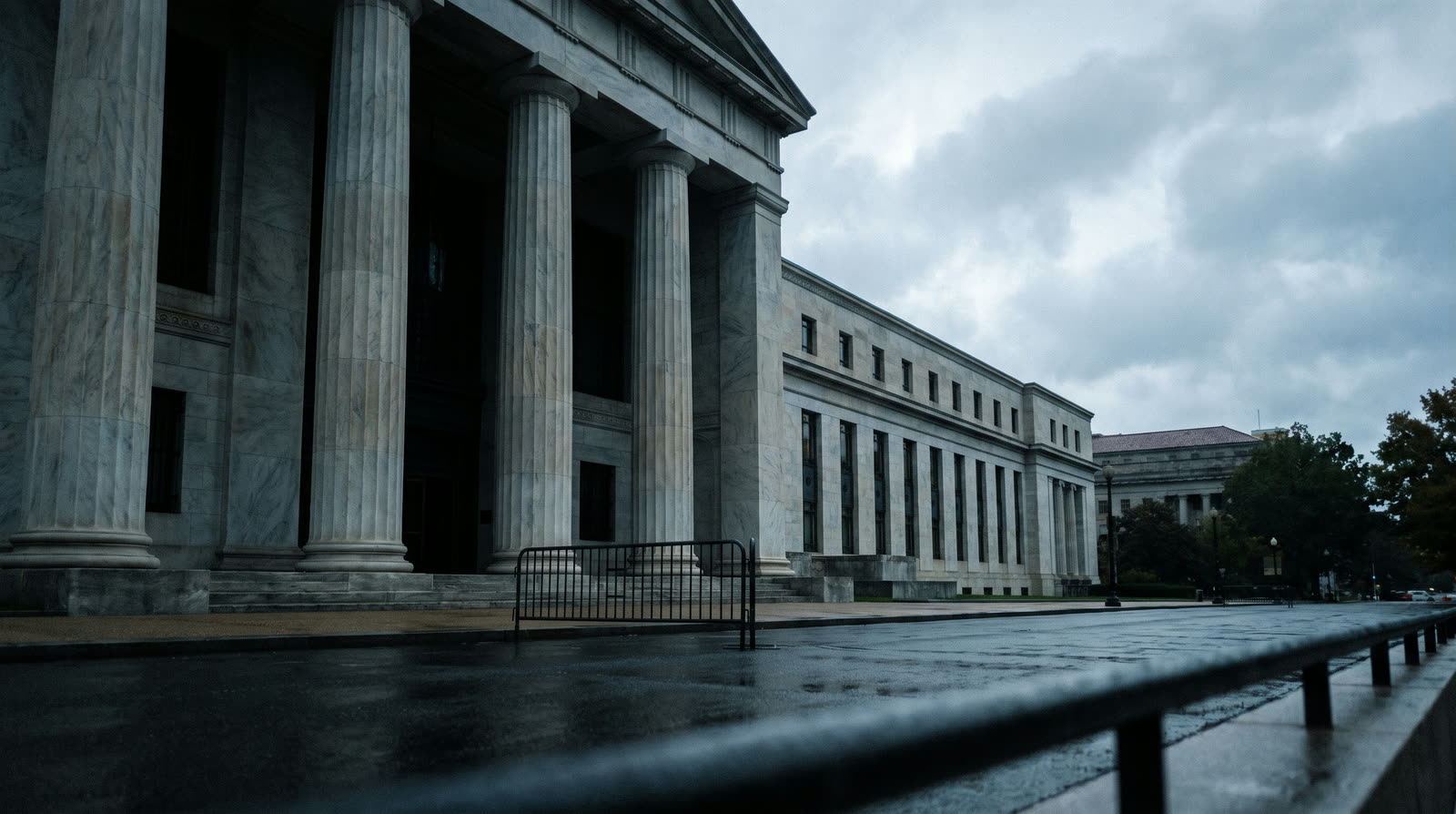
For most of the last few years, the big question about the Federal Reserve, the central bank that sets US interest rates, was simple: when will they cut? In mid-2026, that question has flipped. The Fed is no longer talking about cutting. A growing number of officials are talking about raising rates again. Markets now see a real chance of a 25 basis point hike (a quarter of one percent) by around October 2026.
That word "hike" scares a lot of people, and the news does not always explain why. So let us slow down and walk through it in plain English. What would another rate rise actually do to your loans, your savings, your stocks and your bonds? And what, if anything, should you do about it?
First, what does a "rate hike" really mean?
The Fed controls one key interest rate, called the federal funds rate. Think of it as the wholesale price of money in the US. When the Fed raises this rate, borrowing money gets more expensive across the whole economy. When it cuts, borrowing gets cheaper.
As of mid-2026, that rate sits in a range of 3.5% to 3.75%. At its June 2026 meeting, the Fed held the rate steady. But it also dropped the rate cut it had earlier promised for this year. Some officials now expect the next move to be up, not down.
A "25 basis point hike" just means raising the rate by a quarter of one percent, so the range would move to roughly 3.75% to 4%. It sounds tiny. But because this rate ripples into almost every loan and savings account in the country, even a small move matters.
Why would the Fed hike now?
In one word: inflation. Inflation is the rate at which prices rise. The Fed wants it near 2%. As of mid-2026 it is stuck closer to 3%, with the headline figure near 3.6% and the "core" figure (which strips out food and fuel) near 3.3%. Part of that stickiness comes from an oil-price spike tied to conflict involving Iran.
When inflation stays too high for too long, the Fed's main tool is to raise rates. Higher rates cool spending, which is meant to slow price rises. If you want the fuller picture on why prices have been so stubborn, we walk through it in why US inflation is stuck near 3% in 2026.
What a hike would do to your loans
This is where a rate rise hits home for most families. When the Fed raises rates, the cost of borrowing tends to climb too.
- Credit cards. Most US credit cards have a variable rate that tracks the Fed. If rates go up, the APR (annual percentage rate) on your card usually follows within a month or two. On a $5,000 balance, even a small rate bump adds real money to your interest bill.
- Auto loans. New car loans get a little pricier. On a five-year loan, a higher rate can add tens of dollars to your monthly payment.
- Mortgages. Fixed mortgage rates do not track the Fed directly. They follow longer-term bond yields, which we will get to. But a hawkish Fed (one leaning toward higher rates) tends to keep mortgage rates elevated too.
- Home equity and personal loans. Many of these are variable, so they move up fairly quickly.
The plain takeaway: if you carry variable-rate debt, a hike makes it cost more. Paying that debt down before rates rise is one of the safest moves you can make with spare cash.
What a hike would do to your savings
Here is the good news, and it is often buried under the scary headlines. Higher rates are friendly to savers.
When the Fed holds rates high or raises them, banks tend to pay more on high-yield savings accounts, money market accounts and certificates of deposit (CDs, which are savings accounts that lock your money in for a set time in exchange for a fixed rate). In a "higher for longer" world, cash is no longer trash. You can earn a genuine return just for keeping money safe.
A few simple ideas:
- Move your emergency fund into a high-yield savings account rather than a regular checking account earning almost nothing.
- If you know you will not need some cash for six or twelve months, a CD can lock in today's higher rate before any future cut.
- Watch out for banks that are slow to raise the rate they pay you. Loyalty rarely pays; shop around.
What a hike would do to bonds
Bonds confuse a lot of new investors, so let us keep it simple. A bond is a loan you make to a government or company. In return, they pay you interest.
The key rule is this: when interest rates rise, the price of existing bonds falls. That is because new bonds get issued at the higher rate, so nobody wants to pay full price for your older, lower-paying bond. The flip side is that the yield (the income you can lock in on a new bond) goes up.
US Treasury bonds are the ones to watch, because their yields set the tone for mortgages, savings and even stock prices. If you want a beginner-friendly walk-through, see our guide to Treasury yields in 2026 for savers and traders. The short version: a hawkish Fed tends to push shorter-term Treasury yields higher, which is a headwind for bond prices but a gift for anyone buying new bonds for income.
What a hike would do to stocks
Stocks and interest rates have a tug-of-war relationship. Higher rates can weigh on stock prices for two main reasons.
1. Borrowing costs eat into profits
Companies borrow money to grow. When rates rise, that borrowing costs more, which can shrink profits. Smaller, debt-heavy companies feel this most.
2. Future profits are worth less today
This one is a little more abstract, so here is a plain analogy. Imagine someone promises to pay you $100 in ten years. If safe savings pay almost nothing, that future $100 feels valuable. But if safe savings pay a healthy rate, why wait a decade for $100 when you could earn a solid return today? Higher rates make far-off profits less attractive, and that hits fast-growing, expensive stocks the hardest.
That matters a lot in 2026, because the market has been led by a small group of pricey technology and AI companies. As of mid-2026 the S&P 500, the index of 500 large US companies, sits near 7,500 and is up about 9% this year. But analysts warn that speculation is running at extreme levels. A surprise hike could be the pin that lets some air out of the most speculative names.
None of this means "sell everything". It means understanding why the market may wobble on hawkish news, so you are not caught off guard. Traders who follow the swings closely often treat these moments as opportunity rather than panic, an idea we dig into in our piece on trading sticky inflation.
What a hike would do to the dollar and gold
Two more quick ones, because they show up in the news often.
- The US dollar tends to strengthen when US rates rise, because global investors move money into the US to earn that higher yield. A stronger dollar makes imported goods and foreign travel cheaper for Americans, but it can hurt big US companies that sell a lot overseas.
- Gold pays no interest, so higher rates can make it less appealing next to cash and bonds. That said, when people are nervous, gold can still rise as a safe haven. It does not always follow the textbook.
A calm checklist: what to actually do
You cannot control the Fed. You can control how ready you are. Here is a simple, no-hype plan for a possible hike.
- Attack variable-rate debt first. Credit cards and other variable loans get more expensive when rates rise. Paying them down is a guaranteed, risk-free return.
- Put your cash to work. Make sure your emergency savings sit in a high-yield account or CD, not a near-zero checking account.
- Do not panic-sell stocks. If you invest for the long run, short-term Fed moves are noise. Keep contributing steadily to your 401(k), the workplace retirement account, and any IRA (individual retirement account).
- Know your time horizon. Money you need within a year or two should not be riding on stocks, hike or no hike.
- Watch the calendar, not the rumor mill. The Fed meets on set dates and releases a "dot plot" showing where officials expect rates to go. Those are the moments that move markets.
For traders: respect the event, size your risk
If you actively trade, Fed decision days and big inflation reports can whip prices around fast. A calm, prepared trader plans position size before the news, uses stops, and does not chase the first spike. If you want structured lessons, live sessions and tools for handling these high-volatility days, that is exactly what our membership is built around. The goal is not to predict the Fed. It is to have a plan for whatever the Fed does.
The bottom line
A rate hike in 2026 is no longer a wild idea; markets see a real chance of one by around October. But "hike" is not a synonym for "disaster". It makes borrowing more expensive, so pay down variable debt. It makes saving more rewarding, so put your cash somewhere that pays. It can rattle expensive stocks, so keep your time horizon in mind and keep investing steadily for the long run.
The people who get hurt by rate moves are usually the ones who are surprised by them. Now you will not be. Understand the plumbing, prepare your own finances, and let the Fed do what it is going to do.
This article is general information, not financial advice. Do your own research or speak to a licensed professional before making money decisions.
General information, not advice. This article is published to everyone who reads it and takes no account of your circumstances, so it is not a personal recommendation. Trader Suite is not authorised or regulated by the FCA. Trading and investing involve a substantial risk of loss, and you should seek independent advice before acting. Our articles are researched and drafted with AI assistance and reviewed before publishing. Full risk disclosure.
TraderSuite Team
TraderSuite builds indicators and automated strategies for NinjaTrader 8. Our articles are written by the team, researched and drafted with AI assistance, and reviewed before publishing.