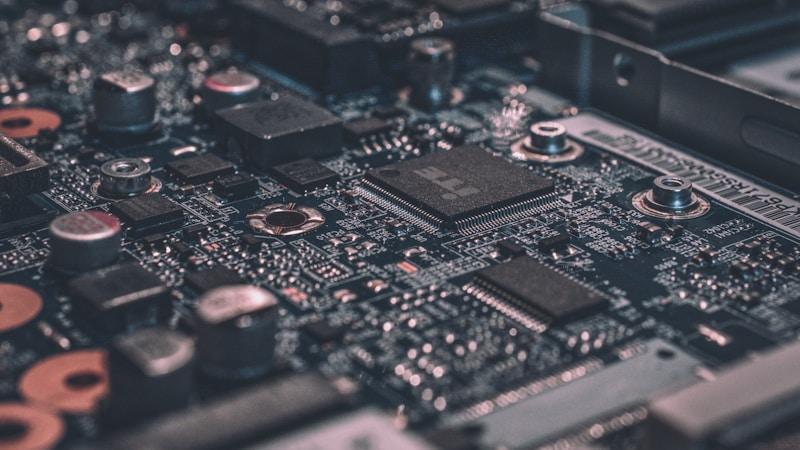
The artificial intelligence revolution has ignited a fierce competition for semiconductor supremacy. As AI applications demand ever-more powerful processing capabilities, the companies designing and manufacturing AI chips have become the most consequential players in the technology sector. For traders, understanding this landscape is essential for navigating tech investing in 2025 and beyond.
The AI Computing Arms Race
The demand for AI computing power is growing exponentially, driven by large language models, generative AI applications, and enterprise AI adoption. This demand has created unprecedented opportunities and challenges across the semiconductor industry.
Why AI Chips Are Different
Traditional computing chips were designed for general-purpose tasks. AI workloads require fundamentally different architectures:
- Parallel processing: AI training requires massive parallel computation
- Memory bandwidth: Large models need rapid data access
- Power efficiency: Data center constraints demand performance per watt
- Specialized instructions: Matrix math operations optimized for neural networks
Market Size and Growth
The AI chip market is expanding at a remarkable pace:
- AI semiconductor market exceeding $150 billion annually
- Growth rates of 30-40% compound annual growth expected
- Data center AI spending driving the majority of demand
- Edge AI emerging as the next growth frontier
The Key Players
NVIDIA: The Dominant Force
NVIDIA has established itself as the undisputed leader in AI chips, with its GPUs becoming the standard for AI training and inference.
Competitive Advantages
- CUDA ecosystem: Decades of software development creating massive switching costs
- Architecture leadership: Hopper and Blackwell generations pushing performance boundaries
- Full-stack approach: Hardware, software, and networking solutions
- Data center relationships: Deep ties with cloud providers and enterprises
Trading Considerations
- Valuation reflects high expectations
- Earnings reports are major market-moving events
- Options markets show elevated implied volatility
- Momentum characteristics require different strategies than value stocks
AMD: The Challenger
AMD has emerged as NVIDIA's primary competitor in AI chips, leveraging its CPU and GPU expertise.
Strategic Position
- MI300 series: Competitive performance challenging NVIDIA
- CPU advantage: EPYC processors dominating server market
- Cost proposition: Often more attractive pricing for buyers
- Open ecosystem: ROCm platform as CUDA alternative
Investment Thesis
- Trades at discount to NVIDIA despite strong positioning
- Market share gains in data center accelerating
- Diversified revenue across gaming, PC, and embedded
Intel: The Comeback Attempt
Intel is executing an ambitious transformation to regain semiconductor leadership.
Turnaround Strategy
- Foundry services: Building capacity for external customers
- Process technology: Massive investments in advanced manufacturing
- Gaudi accelerators: AI chip offerings gaining traction
- Government support: CHIPS Act funding supporting expansion
Risk/Reward Assessment
- Higher risk than NVIDIA or AMD
- Potential for significant upside if execution improves
- Dividend provides income while waiting for turnaround
The Custom Chip Trend
Major tech companies are increasingly designing their own AI chips:
Google TPUs
- Tensor Processing Units optimized for Google's workloads
- Available to cloud customers
- Reducing dependence on NVIDIA
Amazon Trainium and Inferentia
- Custom chips for AWS cloud services
- Cost advantages for Amazon customers
- Vertical integration strategy
Microsoft and Meta
- Both developing custom AI accelerators
- Longer-term threat to merchant chip suppliers
- Currently still major NVIDIA customers
Supply Chain Considerations
TSMC: The Irreplaceable Manufacturer
Taiwan Semiconductor Manufacturing Company produces virtually all leading-edge AI chips:
- Technology leadership: Years ahead of competitors in advanced nodes
- Capacity constraints: Demand exceeding supply for advanced packaging
- Geopolitical risk: Taiwan location creates strategic concerns
- Investment opportunity: Direct play on AI chip demand growth
Equipment Makers
Companies supplying chip manufacturing equipment benefit from industry growth:
- ASML: Monopoly on EUV lithography equipment
- Applied Materials: Broad equipment portfolio
- Lam Research: Etch and deposition leadership
- KLA: Inspection and metrology expertise
Memory Companies
High-bandwidth memory is critical for AI chips:
- SK Hynix: Leader in HBM production
- Samsung: Expanding HBM capacity rapidly
- Micron: U.S.-based memory producer
Trading Strategies for the AI Chip Sector
Momentum Trading
AI chip stocks exhibit strong momentum characteristics:
- Trend-following strategies have performed well
- Earnings beats tend to extend rallies
- Sector rotation within tech driven by AI narrative
Pairs Trading
Relative value opportunities exist:
- NVIDIA vs. AMD spread trades
- Equipment makers vs. chip designers
- Memory vs. logic semiconductor plays
Options Strategies
High implied volatility creates opportunities:
- Earnings straddles for directional uncertainty
- Put spreads for downside protection
- Covered calls to generate income on positions
ETF Approaches
For diversified exposure consider:
- SMH: Broad semiconductor ETF
- SOXX: Alternative semiconductor index ETF
- Sector-specific: AI-focused ETFs emerging
Risks and Challenges
Valuation Concerns
- Many AI chip stocks trading at historical premium valuations
- Growth expectations embedded in prices may be difficult to meet
- Any disappointment severely punished by market
Cycle Risk
- Semiconductor industry historically cyclical
- Inventory corrections can be severe
- Demand sustainability uncertain beyond initial AI buildout
Competitive Dynamics
- Custom chips threatening merchant suppliers
- New entrants attempting to compete
- Technology commoditization over time
Geopolitical Factors
- U.S.-China technology restrictions
- Taiwan supply chain concentration
- Export control evolution
Conclusion
The AI chip wars represent one of the most significant investment themes of our era. The companies that power AI computing are generating enormous profits and reshaping the technology landscape. For traders, this creates abundant opportunities across the semiconductor value chain.
Success requires understanding both the technology dynamics and the market psychology driving these stocks. Position sizing is critical given the volatility, and staying informed about competitive developments is essential. To learn more about how AI is transforming trading itself, read our guide on AI in retail trading. The AI chip theme has room to run, but selectivity and risk management will separate the winners from those caught in inevitable corrections.
General information, not advice. This article is published to everyone who reads it and takes no account of your circumstances, so it is not a personal recommendation. Trader Suite is not authorised or regulated by the FCA. Trading and investing involve a substantial risk of loss, and you should seek independent advice before acting. Our articles are researched and drafted with AI assistance and reviewed before publishing. Full risk disclosure.
TraderSuite Team
TraderSuite builds indicators and automated strategies for NinjaTrader 8. Our articles are written by the team, researched and drafted with AI assistance, and reviewed before publishing.